On 13 August 2026, Professor Li Gang from the Shenzhen Institute of Advanced Technology, Chinese Academy of Sciences, was invited to the Jinan Microecological Biomedicine Shandong Laboratory to deliver a specialised academic lecture. Professor Li Xingang, Deputy Director of the Laboratory, Professor Zhang Di, Principal Investigator, and key research staff attended the event, which was characterised by a vibrant academic atmosphere and lively scientific exchange.
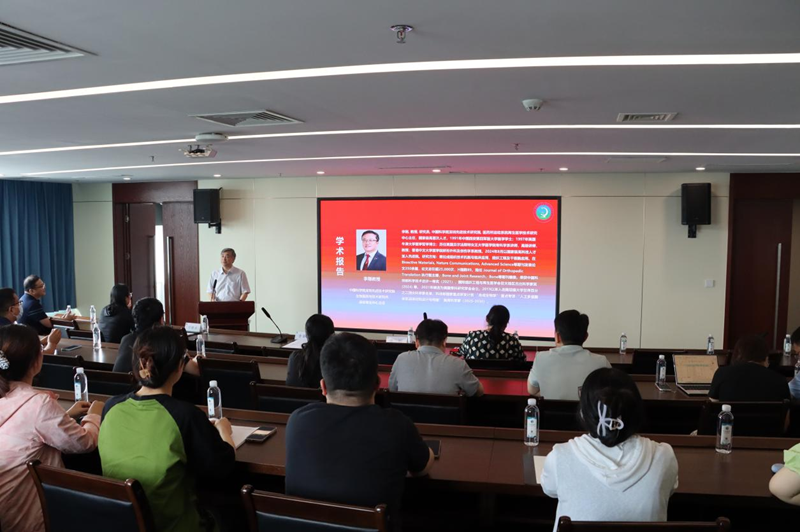
During the session, Professor Li Gang focused on cutting-edge diagnostic and therapeutic technologies for neurological injuries and degenerative diseases, delivering a special academic lecture entitled ‘Cranial Micromotion Surgery: A Novel Surgical Approach for the Treatment of Ischaemic Stroke and Alzheimer’s Disease’. The presentation centred on the clinical challenges in the diagnosis and treatment of neurological injuries and degenerative diseases. Drawing on his extensive research experience in neurosurgery, biomedical engineering and brain injury repair, he systematically introduced the research background, mechanism of action, progress in animal experiments and pathways for clinical translation of this original intervention technique—cranial traction/micromotion surgery. Professor Li Gang explained how the technique intervenes in the intracranial microenvironment through controlled cranial traction and micro-movement, thereby targeting improvements in cranial and cerebral injuries as well as secondary damage following stroke. He also explored entirely new intervention approaches for neurodegenerative diseases such as Alzheimer’s disease, analysed the technical bottlenecks and challenges in model construction currently facing research, and shared his team’s practical experience in interdisciplinary collaboration between medicine and engineering, the development of technical equipment, and the translation of research findings into clinical practice.
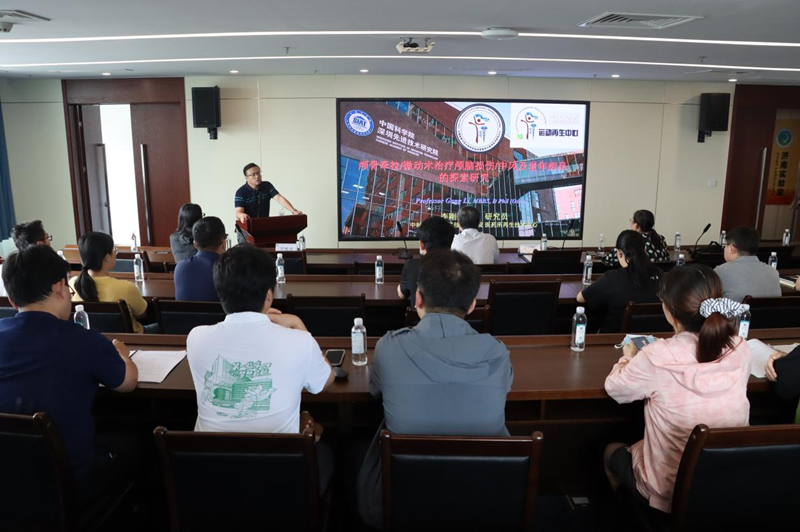
Following the presentation, a lively academic discussion took place. Attendees, drawing on the core content of the presentation and relating it to their own research projects and challenges, actively posed questions to Professor Li Gang and engaged in in-depth discussions on a range of cutting-edge scientific issues and technical challenges, including the elucidation of the molecular mechanisms underlying cranial micro-motion surgery, the optimisation of standardised animal experiment protocols, the management of key translational milestones, and the expansion of the technology’s applicability. Professor Li Gang answered each question patiently and thoroughly, analysing the core of the issues from multiple angles based on his own research experience. He provided targeted suggestions for optimising research approaches, improving experimental protocols and identifying innovative research directions, effectively addressing many of the concerns held by the attending researchers regarding their research projects, technical explorations and the commercialisation of research outcomes.
Also in attendance at the meeting were relevant officials from the Jinan Microecological Biomedicine Shandong Laboratory.