


To effectively enhance the safety awareness of all staff and strengthen capabilities in risk prevention and emergency response, on 3 April 2026, in accordance with relevant directives from the Jinan Municipal Bureau of Science and Technology, the Jinan Microecological Biomedicine Shandong Laboratory organised a specialised fire safety training session. All laboratory staff and interns attended the session, which was chaired by Li Xingang, Deputy Director of the laboratory.
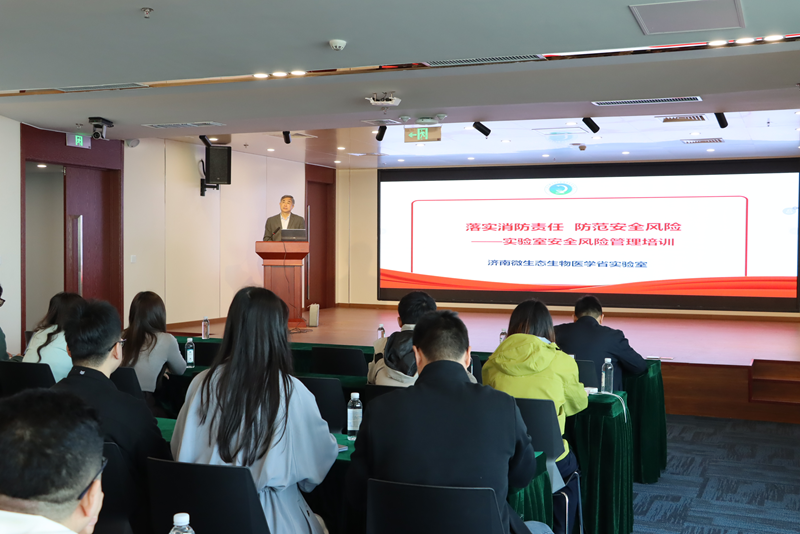
The training followed a structured approach centred on “case studies and warnings + interpretation of the responsibility framework + explanation of operational standards + instruction in evacuation skills”, offering comprehensive content with a clear focus on key areas. The session began by reporting on typical safety incidents such as explosions and deflagrations that have occurred in university laboratories across the country in recent years. It provided an in-depth analysis of common causes of fires, including electrical equipment failures, improper use of hazardous chemicals, non-compliant experimental procedures and chaotic environmental management, using real-life cases to reinforce safety awareness. Subsequently, the training provided a systematic explanation of the work safety responsibility system for all staff, offering a detailed interpretation of the relevant requirements of the Work Safety Law of the People’s Republic of China. It clarified the working principles of “shared responsibility between Party and government, dual responsibilities for each post, and joint management” alongside the “three management principles and three musts”, while specifying the safety duties and legal liabilities of personnel at all levels to reinforce the bottom-line mindset that “safety is everyone’s responsibility, and everyone must fulfil their duties”.
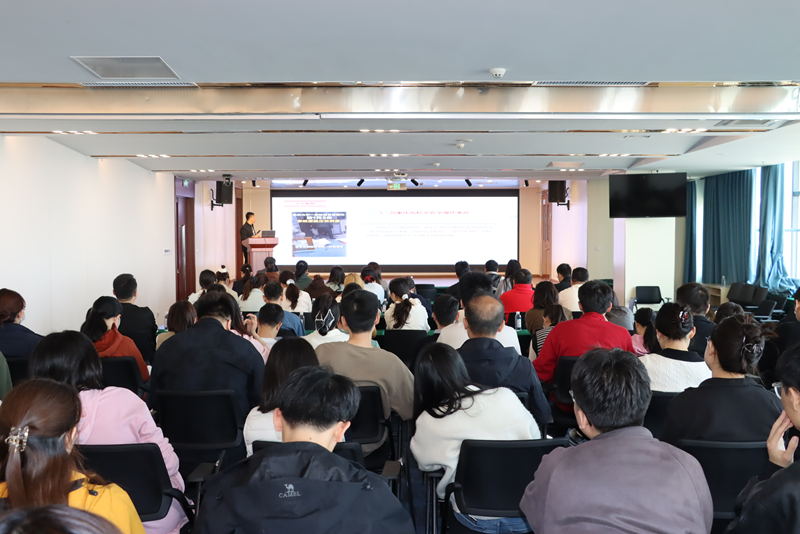
In the fire safety management segment, the training provided a detailed explanation of the seven core tasks: establishing a fire safety responsibility system, public awareness and education, contingency plan drills, fire prevention patrols, facility maintenance, rectification of hidden hazards, and record management. It clarified the standards for building the “four capabilities” in fire safety and the time limits for emergency response. On-site demonstrations covered the use of fire extinguishers, indoor fire hydrants, emergency lighting, and evacuation signage, whilst the “Three Dos, Three Runs, three rescue measures, and three don’ts’ for fire escape and self-rescue, outlining correct evacuation procedures and precautions to enhance the emergency self-rescue capabilities of all staff.
This training has further reinforced fire safety awareness among all staff and improved their ability to identify fire hazards, extinguish incipient fires, and manage emergency evacuations. Moving forward, the laboratory will use this training as an opportunity to fully implement its primary responsibility for fire safety, conduct routine fire safety inspections, and promptly rectify and identify various safety hazards; it will also organise regular fire-fighting and emergency evacuation drills, refine the emergency response plan system, and uphold safety standards through strict criteria and robust measures, thereby providing a solid guarantee for the safe and stable operation of the laboratory’s research work.